




Black-and-white Ruffed Lemur
Varecia variegata
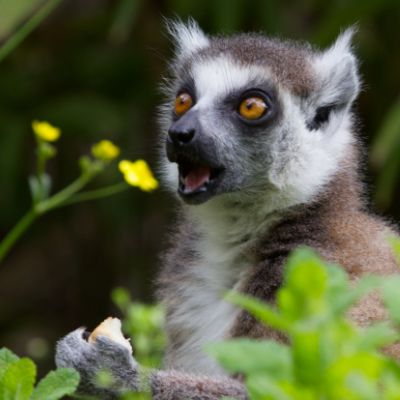
High in the rainforest canopy of eastern Madagascar lives the black-and-white ruffed lemur, one of the forest’s most important “gardeners”. Living in family groups, it feeds mainly on fruit and disperses the seeds of many plant species, helping new trees to grow. However, logging and the conversion of forests into agricultural land are increasingly fragmenting its habitat, making it more difficult for wild populations to survive.
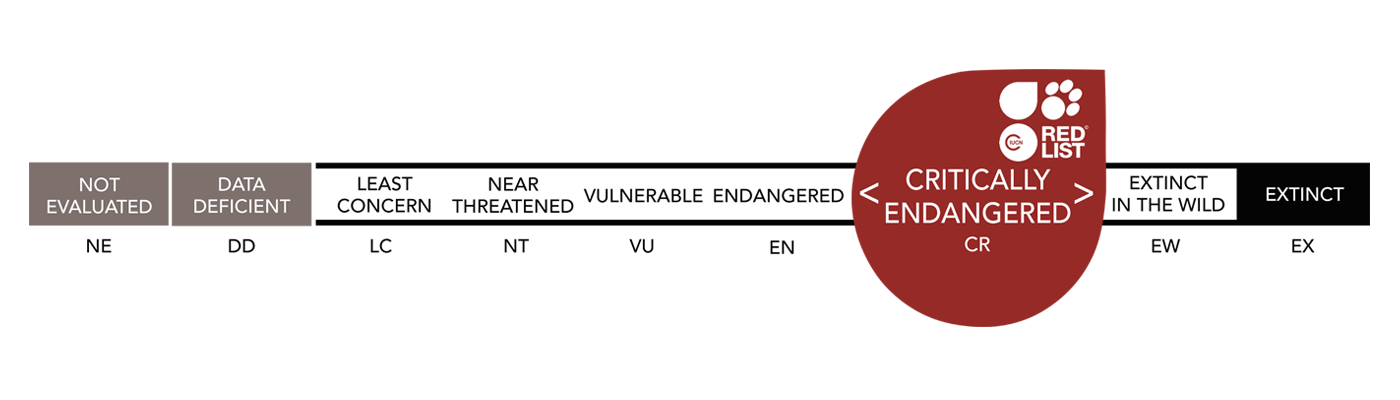
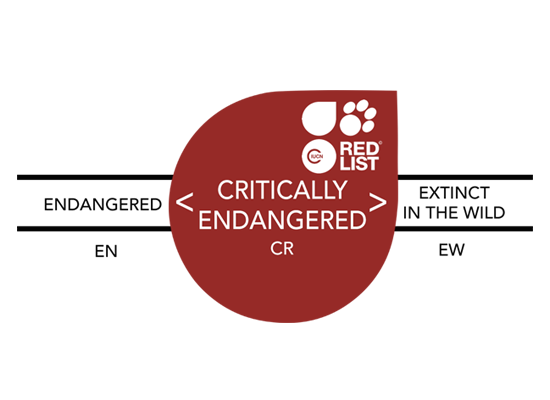
IUCN RED LIST
The IUCN (International Union for Conservation of Nature) classifies living species according to criteria that take into account their level of threat of extinction: the Red List is an indispensable tool for coordinating nature conservation actions, a veritable barometer of the health of our Planet.


EEP Project
This species is included in EAZA’s (European Association of Zoos and Aquariums) EEP programme for breeding endangered species.
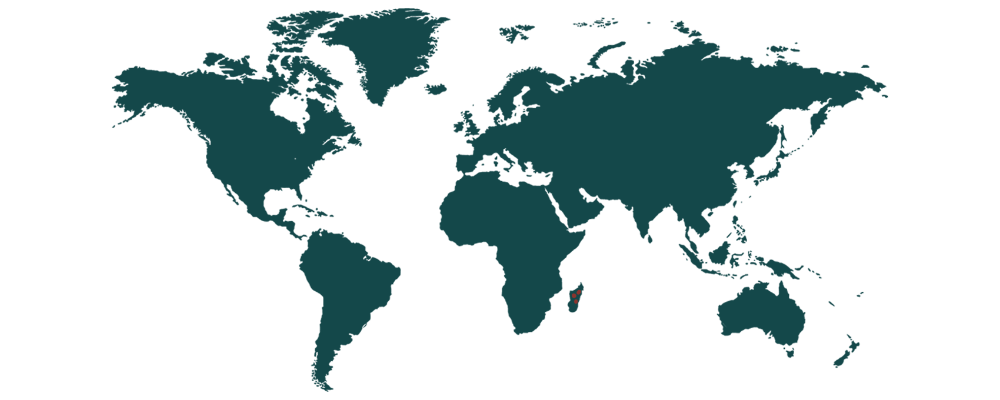
Lives in north-western Madagascar
How many offspring
What does it eat
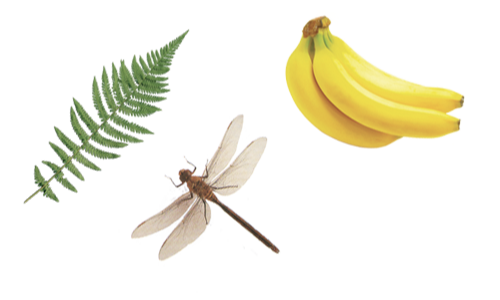
Who eats it
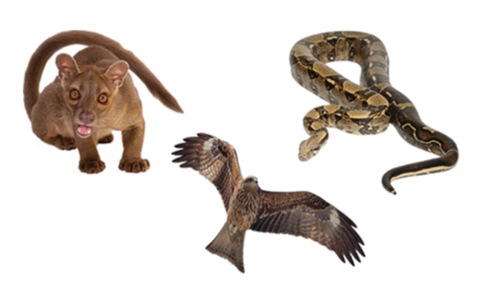
How long does it live

Fun Fact
REMARKABLE POLLINATORS
Without the Varecia lemurs, the Traveller’s Palm, Madagascar’s iconic plant, would struggle to survive and reproduce. These lemurs are particularly fond of nectar: when they approach the plant’s large flowers to feed, their snouts and fur become covered with pollen.
As they move from one plant to another, they inadvertently carry the pollen with them, enabling pollination and the production of new seeds.
Gli animali che vivono nella stessa area geografica


Follow Us!


